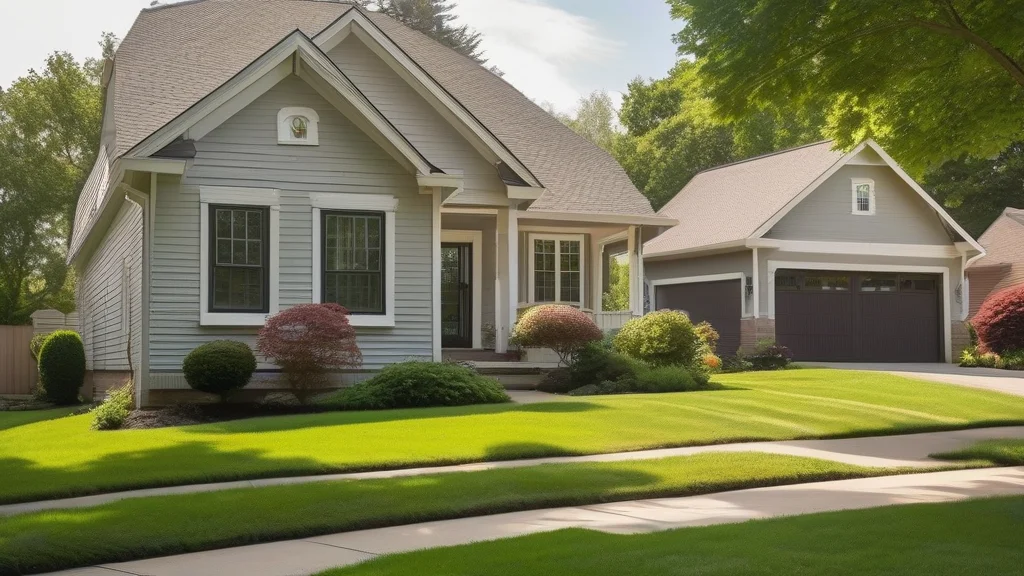
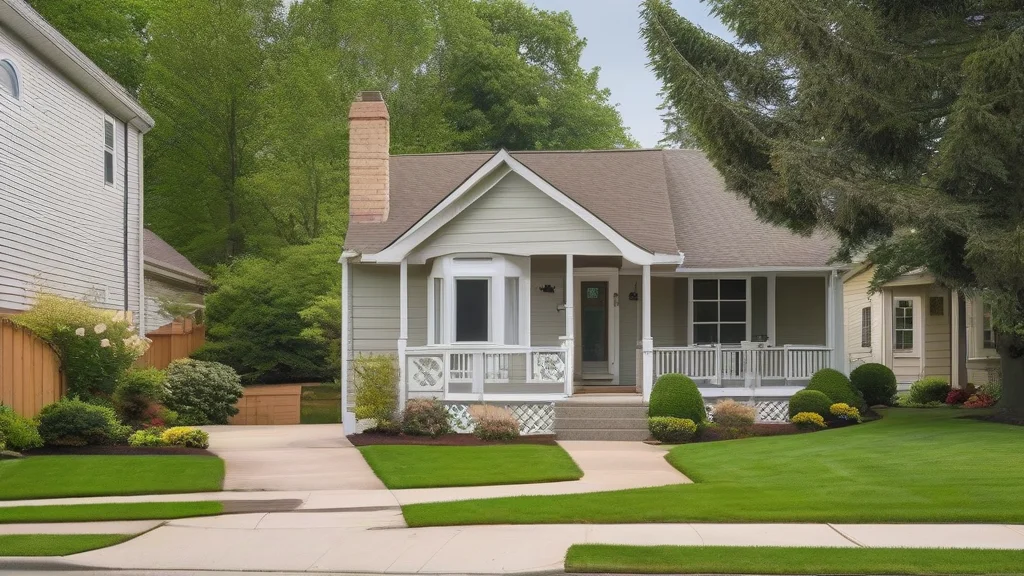
When you shop for home insurance, you likely focus on your own property: the age of your roof, the square footage, your claims history. You might not consider that your neighbor's dead oak tree or the community crime rate three streets over can significantly impact your own premiums. The truth is, your home insurance quote isn't calculated in a vacuum. Insurers assess risk based on the collective environment surrounding your home, making your neighborhood's profile a powerful, and often overlooked, determinant of your annual cost. Understanding these external factors is the first step toward finding the right coverage and potentially mitigating their financial impact.
Your Neighborhood Is a Key Factor in Your Policy
Insurance companies are in the business of predicting and pricing risk. While your personal details matter, they are weighed against a much broader dataset that includes the characteristics of your entire geographic area. This practice, known as geographic rating, means your address alone can trigger a higher base premium before an underwriter even looks at your home's specific features. Companies analyze historical data on claims filed in your ZIP code, neighborhood, and even your specific block. If the area has a high frequency of theft, vandalism, or weather-related damage, every homeowner in that vicinity shares a portion of that statistical risk.
The logic is straightforward for insurers: past claims in an area are a strong indicator of future claims. A neighborhood with older infrastructure, dense tree canopy, or proximity to a wildfire zone presents a higher collective risk pool. Your individual home insurance policy, therefore, isn't just insuring your four walls; it's partially insuring you against the environmental and social hazards prevalent where you live. This is why two identical homes just a few miles apart can have insurance costs that differ by hundreds of dollars annually.
Your home insurance premium is heavily influenced by the collective claim history and risk profile of your entire neighborhood, not just your individual property.
Hidden External Factors That Drive Up Your Costs
Beyond the general neighborhood statistics, specific external factors tied to your immediate surroundings can trigger premium increases or even coverage denials. These are often elements entirely outside your control, which makes them particularly frustrating for homeowners.
Consider proximity to hazards. Living next to a vacant lot with overgrown vegetation increases your wildfire risk. A home adjacent to a river or creek, even if your property isn't technically in a flood zone, may be viewed as having elevated water damage risk. Similarly, being near a fire hydrant or a fire station can actually lower your premiums, while being far from emergency services can raise them.
Important
If a neighbor's tree is visibly dead, leaning, or has large overhanging branches that could damage your home, your insurer may require you to address it or face a premium increase. Document the hazard with photos and communicate with your neighbor in writing.
Another critical factor is shared property lines and structures. A dilapidated fence, a crumbling retaining wall, or an old shed on a neighbor's property that borders yours can pose a direct threat. If that structure collapses and damages your property, it could lead to a complex liability claim. Insurers are wary of these adjacent risks. The condition of neighboring homes also matters; a poorly maintained house with faulty wiring is a fire risk to the entire block.
Community-wide issues like local crime rates directly affect premiums for theft and vandalism coverage. Even if you have a state-of-the-art security system, a high burglary rate in your ZIP code will lift the base rate for everyone. Furthermore, municipal factors play a role: the quality and funding of local fire departments, building code enforcement, and even the frequency of garbage collection (which can affect vermin problems) are all considered in the broader risk assessment.
- Conduct a Visual Property Audit
Walk around your home's exterior and note any potential hazards originating from neighboring properties. Look for dead trees, unstable structures, overgrown vegetation, or standing water.
- Research Your Area's Claim History
Ask your insurance agent or check public municipal records for common types of claims in your neighborhood. Understanding the local risk profile helps you ask better questions.
- Engage in Proactive Communication
If a neighbor's property poses a clear risk, a polite conversation can go a long way. Offer to share the cost of removing a dangerous tree limb, framing it as a mutual safety issue.
The Direct Financial Impact on Your Premiums
How much can these external factors actually cost you? The impact varies, but it's rarely insignificant. Data shows that simply moving from a low-risk to a high-risk ZIP code can increase your annual home insurance premium by 20% or more. For the average policy, that's an extra $300 to $400 every year, paid for risks you didn't create.
Specific hazards have specific costs. A home deemed at risk from a neighboring tree might see a 10-15% surcharge unless the homeowner can prove the risk has been mitigated. In coastal areas, proximity to the water without specific wind mitigation features can double premiums. The financial impact extends beyond monthly bills. When filing a claim related to a neighbor's property—like a tree fall or water runoff—you may face higher deductibles or disputes over liability, leading to out-of-pocket expenses and potential rate hikes at renewal time.
"We see too many clients who are shocked at a premium jump at renewal. Often, it's not because of anything they did, but because their neighborhood's overall risk score worsened due to a spike in local claims. Shopping your policy with a fresh, detailed application is often the best recourse."
It's also important to understand that these factors can affect your eligibility, not just your price. Some insurers may refuse to write new policies in neighborhoods they've flagged as excessively risky. This can limit your options and force you into the state's insurer of last resort or a non-standard carrier, where premiums are substantially higher. Your ability to secure affordable, comprehensive home insurance is therefore tethered to the collective fate of your community.
Advantages of a Low-Risk Neighborhood
- Lower Base Premiums — You start from a more affordable rate before your personal details are even added.
- More Insurer Choices — Major carriers compete for business in safer areas, giving you leverage.
- Easier Claims Process — Fewer suspicious claims in the area can lead to faster, less contentious payouts.
Disadvantages of a High-Risk Area
- Higher Mandatory Costs — You pay for collective risks through elevated premiums.
- Limited Coverage Options — Some perils (like flood or earthquake) may require separate, costly policies.
- Potential for Non-Renewal — If area risk spikes, your insurer might drop your policy entirely.
How to Take Action and Protect Your Rates
While you can't single-handedly change your neighborhood's crime stats or weather patterns, you are not powerless. Taking proactive steps can help mitigate risks, satisfy underwriters, and potentially lower your home insurance costs.
First, fortify your own property against common local threats. If wildfires are a concern, create defensible space by clearing brush and using fire-resistant landscaping. In hurricane-prone regions, install storm shutters and hurricane clips. For theft, invest in an alarm system monitored by a central station, smart locks, and motion-sensor lighting. Many insurers offer discounts of 5% to 20% for these protective devices, which can offset some of the geographic premium load.
Did You Know?
Installing a monitored burglar alarm or a smart water leak detector can not only prevent disasters but also qualify you for significant home insurance discounts, often paying for the device within a few years.
Second, shop your policy regularly. Insurance companies constantly reassess their geographic risk models. A carrier that considered your area high-risk five years ago may have updated its data, or a new insurer may be aggressively pursuing business in your region. Getting multiple quotes is the most reliable way to ensure you're not overpaying due to an outdated assessment. When you shop, be prepared to detail the protective measures you've taken; this shifts the conversation from collective risk to your individual risk reduction.
Third, consider using a comparison service that understands these nuances. A platform like PolicyMatcher specializes in connecting homeowners with licensed agents who have access to multiple carriers. Instead of filling out dozens of forms, you describe your situation once, including any neighborhood-specific concerns or property fortifications, and they do the legwork of finding companies with favorable rates for your exact profile. This is especially valuable when your address carries a geographic premium.
PolicyMatcher
A free service that matches you with a licensed insurance agent who shops your home insurance profile across their network of carriers. This saves you time and can uncover savings, particularly if your neighborhood's risk factors are priced differently by various companies. One call can connect you to an expert who understands how external factors impact premiums.
Securing the Right Home Insurance for Your Unique Situation
Ultimately, securing the right home insurance means looking beyond the basic checkbox comparison of coverage limits. You need a policy that accurately reflects both your home's virtues and its vulnerabilities, including those imposed by its location.
When evaluating quotes, pay close attention to perils covered. A standard policy might cover fire but not mudslide. It covers theft but not sewer backup. Ensure you understand exactly what disasters are included and, more importantly, excluded. If you live near a hillside or in an area with old sewer systems, you may need to add endorsements or separate policies. Don't assume you're covered for risks common to your area.
Additionally, scrutinize the dwelling and liability limits. In today's market, construction costs are volatile. If a neighborhood disaster like a wildfire increases demand for contractors, your cost to rebuild could skyrocket. Make sure your dwelling coverage is based on current local rebuilding costs, not your home's market value. Similarly, higher liability limits are prudent in litigious environments; an accident stemming from a shared neighborhood hazard could involve significant legal costs.
Always request the exact replacement cost calculation from your insurer. Ask if it includes debris removal and accounts for current local labor and material costs. Being underinsured after a widespread disaster is a devastating financial position.
Finally, build a relationship with a knowledgeable agent. A good agent will explain how your neighborhood factors into your premium, advise on risk mitigation discounts, and help you navigate claims if they arise from an external event. They act as your interpreter in the complex world of home insurance, ensuring your policy is a true safety net, not just a mandatory expense.
Frequently Asked Questions
Directly, no. An insurer cannot cancel your policy solely because of a neighbor's actions. However, if the overall risk profile of your neighborhood deteriorates significantly—due to a spike in claims, increased crime, or new environmental hazards—your insurer might choose not to renew your policy when it expires. They can also increase premiums for the entire area.
Typically, your own home insurance policy covers damage to your house, regardless of whose tree it was. Your insurer would then potentially seek reimbursement from your neighbor's insurance if your neighbor was negligent (e.g., they knew the tree was dead and did nothing). The key is proving negligence, which can be difficult.
No. While everyone shares a similar geographic risk factor, individual premiums vary based on the home's age, construction, claims history, the owner's credit score, and the specific coverage choices and deductibles selected. Two neighbors can have materially different premiums for similar homes.
It's wise to compare quotes every 2-3 years. This ensures you're not missing out on better rates as your situation changes (like adding a security system) or as insurers adjust their pricing models for your area. Market competition can create new opportunities for savings.
Your home insurance premium is a complex calculation where your personal responsibility meets communal fate. The condition of your neighbor's tree, the crime rate down the block, and the frequency of storms in your county all feed into the final number on your bill. By understanding these influences, you move from being a passive payer to an informed consumer. You can take steps to fortify your home, communicate with neighbors about shared risks, and most importantly, shop strategically for a policy that offers fair value for your unique circumstances. Don't assume your current rate is the best you can get, especially when external factors are at play.