
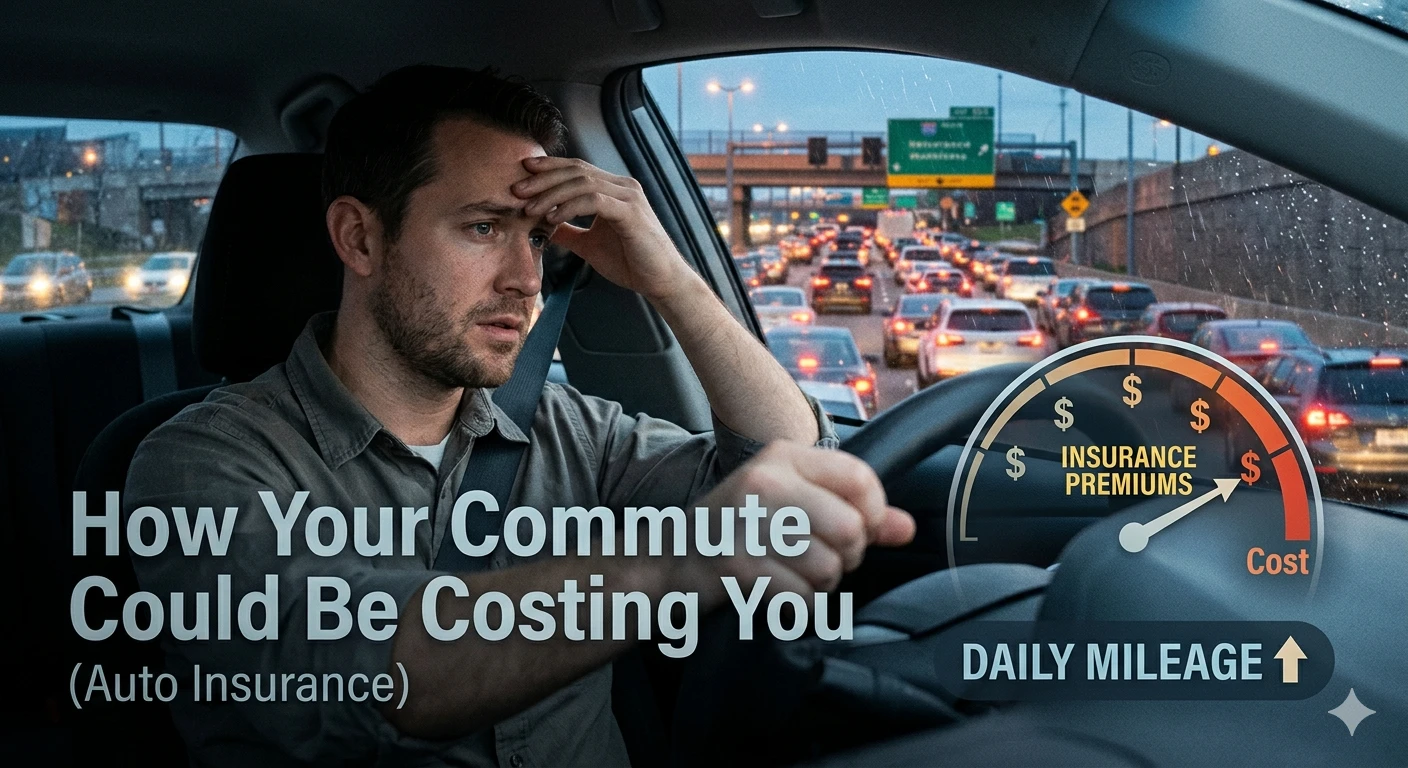
Your auto insurance premium is not a fixed number. It’s a dynamic reflection of your personal risk profile, and surprisingly, your daily commute is one of its most influential architects. Most drivers focus on obvious factors like their driving record or vehicle type, but they overlook the quantifiable risk insurers assign to their everyday travel habits. The distance you drive, where you park, and the roads you frequent are constantly feeding data into your insurer’s risk model. Understanding this connection is the first step to taking control of your costs.
Many people pay hundreds of dollars more each year for their auto insurance simply because they haven’t aligned their policy with their actual driving patterns. A high-mileage driver with a policy built for low annual use is throwing money away. Conversely, a city dweller who parks on the street but hasn’t adjusted their coverage is playing a dangerous financial game. This article breaks down exactly how insurers see your commute and provides actionable strategies to ensure you’re not overpaying or under-protected.
The Hidden Costs of Your Daily Drive
When you apply for an auto insurance quote, you’re asked for your estimated annual mileage. This isn’t a casual question. Insurers have mountains of actuarial data proving that more time on the road directly correlates with higher claim frequency. Think of it as exposure time. Every minute you spend driving is another minute you’re exposed to potential accidents, theft, and vandalism. A person driving 25,000 miles a year has more than double the road exposure of someone driving 10,000 miles, and the premium reflects that elevated risk.
But mileage is just the starting point. Your insurer also cares deeply about where those miles are accumulated. A 30-mile daily commute on a congested urban freeway presents a fundamentally different risk profile than the same distance on rural highways. Urban environments have higher rates of collisions, theft, and hit-and-run incidents. Parking location is another critical, and often underestimated, variable. A vehicle parked overnight in a locked, private garage is statistically far less likely to be stolen or damaged than one left on a busy city street. These environmental factors are priced directly into your policy.
Did You Know?
Many insurers now use telematics programs (like Progressive’s Snapshot or Allstate’s Drivewise) to track your actual driving habits. Your braking patterns, speed, and even the time of day you drive can influence your final premium, offering discounts for safe behavior.
How Insurers Calculate Risk
Insurance companies are in the business of predicting the future. They use complex algorithms that weigh dozens of variables to forecast your likelihood of filing a claim. Your personal details—age, credit history, driving record—form one part of the equation. The operational details of your vehicle use form another, equally important part. This is where your commute gets dissected. Insurers categorize risk with remarkable granularity, and misrepresenting your driving habits can have serious consequences, including claim denial.
The core principle is simple: risk equals probability multiplied by potential cost. A short commute in a safe neighborhood lowers the probability. Driving an expensive car increases the potential cost. Your auto insurance premium is the sum of these calculated risks. Companies assign you to a specific rating tier based on this overall profile. A driver with a clean record but a brutal 50-mile daily commute through high-crash corridors might be placed in a higher-risk tier than a driver with a minor fender-bender who only drives 3,000 miles a year locally. It’s a holistic assessment.
Your auto insurance rate is not just about you as a driver; it's about your car's lifestyle. Where it sleeps at night and the roads it travels daily are critical data points that directly impact your premium.
The Role of Credit-Based Insurance Scores
While not directly related to your commute, it’s impossible to discuss auto insurance pricing without acknowledging credit-based insurance scores. In most states, insurers are permitted to use a modified version of your credit history to predict claim risk. Studies show a strong correlation between financial responsibility and driving responsibility. This score can often impact your premium more than your driving record itself. A driver with excellent credit and a moderate commute will typically pay significantly less than a driver with poor credit and the same commute. It’s a contentious practice, but a current reality in premium calculation.
Mileage: The Biggest Factor
Annual mileage is the single most significant commute-related factor in your auto insurance cost. Insurers typically set clear mileage brackets: low (under 7,500 miles), average (7,500-15,000), and high (over 15,000). Exceeding the average bracket can trigger a surcharge of 10-20%. The logic is inescapable. More miles mean more intersections, more highway merges, more weather events, and more opportunities for something to go wrong. It’s a pure numbers game.
This is why accurately reporting your mileage is crucial. Underestimating to get a lower quote is called material misrepresentation and is grounds for your insurer to cancel your policy or deny a claim. If you start a new job with a longer commute, you should inform your insurer. Conversely, if your mileage drops dramatically—perhaps you’ve retired or started working from home permanently—you must notify them to request a re-rating and potential discount. Many companies offer a low-mileage discount that can save you up to 10% on your premium.
Advantages of Accurate High-Mileage Reporting
- Claim security — Your policy remains valid, and claims won’t be denied due to fraud.
- Proper coverage levels — You ensure your liability limits are adequate for increased road exposure.
- Potential for specialized policies — Some insurers offer policies tailored for commercial or gig work use.
Risks of Underreporting Mileage
- Claim denial — The insurer can refuse to pay for accidents, leaving you fully liable.
- Policy cancellation — Your coverage can be terminated mid-term for misrepresentation.
- Higher future costs — A cancellation makes it harder and more expensive to find new insurance.
Parking and Location Premiums
Where your car is parked for 8-12 hours each night is a massive determinant of risk. Insurers assess comprehensive coverage (which covers theft, vandalism, fire, and weather) largely based on this factor. Zip code-level data on crime and vandalism rates directly feeds into your premium. A car parked on the street in an urban zip code is a far more attractive target for thieves and is more vulnerable to accidental damage from other vehicles than one in a suburban driveway or secured garage.
The premium difference can be stark. Moving your parking location from a city street to a private, attached garage could reduce your comprehensive premium by 15% or more. If you’re moving, even within the same city, your auto insurance costs will change. Always update your address with your insurer immediately. Furthermore, some policies have specific clauses about primary parking. If you claim your car is garage-kept but regularly park it on a public street, you could again face claim complications.
Important
If you must park on the street, consider investing in visible anti-theft devices like a steering wheel lock. While they may not lower your premium immediately, they can deter theft and strengthen your claim if a break-in occurs, proving you took reasonable steps to secure the vehicle.
Route Patterns and Traffic Exposure
The quality of your miles matters as much as the quantity. A 10-mile commute on quiet, well-maintained suburban roads is statistically safer than a 5-mile commute through a dense downtown gridlock zone. Insurers analyze traffic density, accident rates per road segment, and even time-of-day patterns. Rush hour driving consistently ranks as a high-risk activity due to congested roads, driver frustration, and frequent stop-and-go situations that lead to rear-end collisions.
This is where telematics or usage-based insurance (UBI) programs become highly relevant. These programs monitor not just how much you drive, but how you drive. Hard braking, rapid acceleration, and late-night driving can all negatively impact your score and cost you discounts. For the safe commuter, however, they offer a path to significant savings. By demonstrating smooth driving habits even in heavy traffic, you can potentially offset the geographic risk with a personalized safe-driving discount.
Optimizing Your Policy for Your Commute
Knowledge is power. Now that you understand how your commute affects your auto insurance, you can take strategic action. The goal is to tailor your policy so you’re not overpaying for unnecessary risk assumptions or leaving yourself dangerously underinsured. This requires a proactive approach, starting with a brutally honest assessment of your current driving life.
- Audit Your Current Driving Profile
For one month, track your exact mileage, typical routes, and parking locations. Compare this to what your insurer has on file. Be precise. This data is the foundation for all your next steps.
- Shop for a Commute-Friendly Insurer
Not all auto insurance companies weigh commute factors the same. Some specialize in urban drivers, others in low-mileage policies. Use your audit data to get accurate, comparable quotes. A provider that offers strong telematics discounts might be perfect if you have a long but safe highway commute.
- Adjust Your Coverage Structure
High-mileage drivers should consider higher liability limits (think 100/300/100 instead of state minimums) due to increased exposure. If you have an older car parked on the street, consider dropping collision coverage if the premium exceeds 10% of the car’s value. Focus your spending on protection that matches your real risk.
- Leverage Every Available Discount
Ask explicitly about low-mileage discounts, telematics programs, anti-theft device discounts, and bundling policies. If you’ve recently moved to a safer parking situation, demand a re-rating. These aren’t automatic; you must request them.
What users say
Customers frequently praise the platform's ability to find niche discounts for low-mileage, telematics, and multi-policy scenarios that other aggregators missed. The clarity of the comparison process is a consistent highlight.
Why we picked this
PolicyMatcher excels at connecting drivers with insurers whose underwriting models best match specific commute profiles. Instead of a one-size-fits-all quote, their algorithm prioritizes carriers known for favorable rates for your unique combination of mileage, location, and vehicle use.
- Wide network of regional and national carriers
- Advanced filtering for commute-related discounts
- Transparent side-by-side coverage comparisons
- Final purchase is with carrier, not directly through platform
- Telematics quotes require a separate application
Bundle your auto insurance with your renters or homeowners policy. This single move can save an average of $471 per year, according to industry data, often offsetting any commute-related premium increases.
Your relationship with your auto insurance provider should be dynamic. A policy from five years ago almost certainly doesn’t reflect your current life. An annual review—where you reassess your mileage, parking, and coverage needs—is non-negotiable for financial fitness. This proactive habit ensures you are always positioned to capitalize on new discounts or adjust coverage as your commute evolves. The most expensive auto insurance mistake is setting a policy and forgetting it exists.
Frequently Asked Questions
Most insurers define low annual mileage as under 7,500 miles per year, though some set the threshold at 8,000 or even 10,000 miles. To qualify, you typically need to verify your odometer reading or enroll in a telematics program that tracks your distance. The discount can range from 5% to 15% off your premium.
Yes, almost certainly. The comprehensive portion of your premium, which covers theft, vandalism, and weather damage, is directly tied to your primary parking location. Moving from a secured garage to a public street is a material increase in risk and will likely result in a noticeable rate increase. You must inform your insurer of this change immediately.
It depends on your driving behavior. If you have a long but predictable highway commute with minimal hard braking, telematics can be a great way to prove your safe habits and earn a discount of up to 30%. However, if your commute involves heavy stop-and-go traffic where harsh braking is common, it could potentially raise your rate. Many programs offer a trial period with no penalty, so you can test it risk-free.
You should compare auto insurance quotes at least once every 12-24 months, or whenever you experience a major life change. This includes changes to your commute (new job, moved homes), marital status, adding a teen driver, or buying a new vehicle. Loyalty discounts exist, but they are often outweighed by the savings found by switching to a carrier that better aligns with your current risk profile.